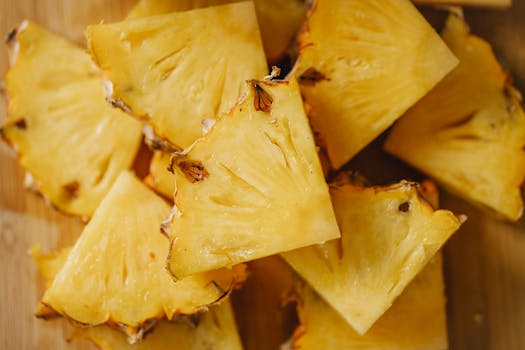
Pineapple Reduction: A Chef's Concise Method
Forget fussy techniques. This isn't your average pineapple preparation; it's a streamlined approach emphasizing surgical precision and zero superfluous implements. The objective? A flawlessly prepped pineapple, minimizing both exertion and refuse. Consider it culinary minimalism – elegance through efficiency.
Step 1: Initial Stabilization
Begin by anchoring the pineapple, crown-up, upon your cutting board. This foundational step underpins the entire procedure; a stable base is paramount, analogous to a builder's unwavering groundwork.
Step 2: Apex Excision
Employ a razor-sharp chef’s knife to execute a single, swift excision of the apical crown. This decisive initial incision establishes the rhythm for the subsequent steps – a crisp start promises a clean conclusion.
Step 3: Basal Severance
Replicate the previous action at the base, removing it with a similarly expeditious cut. Think of this as a sculptor paring away extraneous material to unveil the fruit’s inherent beauty.
Step 4: Lateral Dissection
Return the pineapple to an upright position. Now, execute precise vertical incisions along the fruit's flanks, adhering to the natural curvature, thereby removing the robust exterior rind. This isn't meticulous micro-surgery; it’s about controlled, decisive removal – akin to a citrus peel, yet more decisive.
Step 5: Defect Elimination
Scrutinize the exposed flesh for residual “eyes.” These imperfections may be excised individually with the knife's point, or strategically removed en masse via a shallow, broad cut. This phase demands tactical removal, comparable to a sculptor meticulously refining their masterpiece.
Step 6: Final Bisection
With a single, flowing cut down the central axis, bisect the fruit. Subsequent segmentation into palatable portions or slices is then straightforward, ideal for immediate enjoyment or culinary applications.
This entire operation, from initiation to completion, demands only one tool: a meticulously maintained chef’s knife. This embodies the essence of minimalist efficiency.
The Zen of Pineapple: Precision in Preparation
A streamlined pineapple dissection isn't merely about tool reduction; it's a cultivated mindfulness, a respectful communion with the fruit's inherent perfection. Elegant simplicity replaces frustrating complexity—a culinary haiku instead of a rambling epic.
Forget the chaotic, multi-tool assembly line of conventional pineapple prep. Our method is surgical precision, each deliberate stroke eliminating wasteful, energy-sapping motions. Efficiency springs from purposeful movement; every action serves a singular, decisive goal.
Waste reduction is paramount. Conventional tutorials generate mountains of discarded pineapple, destined for the compost bin. Our technique meticulously utilizes every fragment, like a master Lego architect constructing a magnificent edifice from seemingly insignificant pieces. No unnecessary scraps are tolerated.
Time—that most precious commodity—is conserved. Fewer steps, fewer instruments translate to dramatically accelerated prep time. Picture a Formula One pit crew’s lightning-fast efficiency contrasted with a leisurely bicycle repair; this is precision in motion, unburdened by superfluous effort.
Mindful preparation fosters a deeper connection with the ingredients and the culinary journey. The emphasis shifts from end-product to the meditative process itself, akin to Zen calligraphy—the execution as significant as the finished artwork. Each movement is a mindful breath, connecting us to the essence of the fruit.
The inherent simplicity mitigates the stress of convoluted prep. Fewer tools and steps equate to fewer opportunities for error or frustration. It's the difference between traversing a labyrinthine maze and following a direct, stress-free route to your desired destination.
Clean, efficient cuts safeguard the pineapple's delicate flesh, preserving its natural sweetness and preventing bruising. Handle it with the tender care bestowed upon a blooming orchid; a gentle touch maximizes the fruit's pristine essence.
Ultimately, kitchen minimalism transcends mere efficiency. It champions mindful consumption, waste diminution, and the rediscovery of joy in elegant, streamlined preparation. It's about more than just the meal; it is a philosophy. For more tips on minimizing waste in the kitchen, check out our guide on [how-to-grow-a-pineapple](/how-to-grow-a-pineapple). And if you're looking for another delicious recipe, try our [how-to-cook-baked-potatoes](/how-to-cook-baked-potatoes) guide! Learning [how-to-cut-papaya](/how-to-cut-papaya) can also help you minimize food waste. Finally, for those looking to improve their knife skills, we also have a guide on [how-to-make-brown-sugar](/how-to-make-brown-sugar), which requires some precision cutting. For further information on knife skills, consult this resource from the [culinary arts institute](https://www.ciachef.edu/): Additionally, reducing food waste is important for environmental sustainability, as detailed by the [EPA](https://www.epa.gov/recycle/reducing-wasted-food-home). The importance of mindful cooking practices are also discussed in this article from [Harvard Health](https://www.health.harvard.edu/mind-and-mood/mindful-eating).