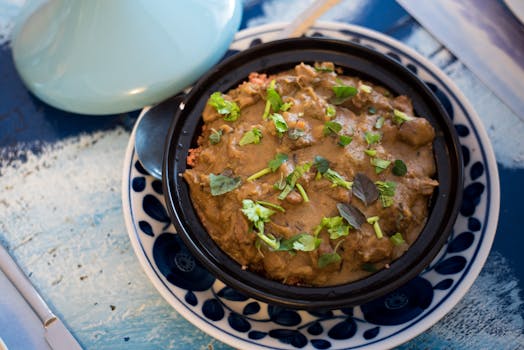
The Culinary Alchemy of Beef Stew: A Flavor Architect's Perspective
The quest for unparalleled gustatory excellence in beef stew transcends mere recipe adherence; it demands a masterful orchestration of biochemical processes. A foundational element, the Maillard reaction – that captivating dance between proteins and sugars under intense heat – isn't simply cosmetic enhancement. No, it's the primordial genesis of a myriad of savory compounds, the very bedrock upon which our flavor edifice is constructed, like laying the cornerstone of a magnificent Gothic cathedral – robust and flavorful, ensuring structural integrity and aesthetic splendor.
Consider then the transformative power of collagen, that abundant protein within connective tissues. Slow, meticulous cooking doesn't merely tenderize; it catalyzes the conversion of collagen into gelatin, resulting in a luxurious, mouth-coating richness, a velvety embrace upon the palate. Imagine a skilled sculptor meticulously coaxing forth the intrinsic beauty of a marble block – the once-unyielding raw material yielding to become supple, yielding morsels, a dance of textures between the teeth.
The aromatic triumvirate – onions, carrots, and celery – are far more than mere vegetables; they’re flavor precursors, potent catalysts. Their inherent sugars undergo caramelization, their volatile organic compounds entangling in a fragrant synthesis, forming the aromatic canvas for more intricate flavor notes. It's not simply the addition of ingredients, but the artful weaving of threads into an exquisite gustatory tapestry.
Furthermore, let us not overlook the transformative potential of the humble broth. Through prolonged simmering of bones, herbs, and spices, a simple liquid metamorphoses into a complex flavor matrix, a potent elixir distilled by time. This protracted extraction yields a symphony of nuances, each subtly amplifying the other, much like a fine vintage wine patiently aging in the oak, its character deepening with every passing season. The patience inherent in this slow simmer is paramount.
Finally, the interplay of acidity, salinity, and fat – a judicious splash of wine or tomato paste, a precise pinch of salt, the subtle unction of rendered fat – profoundly shapes the final flavor profile. It’s a matter of equilibrium, an intricate balancing act; a harmonious composition rather than a mere aggregation of individual flavors.
Actionable Elucidation: Fear not experimentation. Embrace aggressive searing to maximize Maillard reaction intensity. Employ diverse cuts of beef, including less expensive, tougher options, to fully appreciate the collagen's transformative magic. Resist the temptation to rush the simmering; this crucial stage allows for complete flavor integration, achieving profound gustatory depth. Above all, remember that balance – the cornerstone of culinary harmony – is paramount; each element plays a vital role in the overall symphony of flavors.
The essence of culinary artistry, my friends, lies not in rote adherence to instructions, but in a profound grasp of the fundamental principles at play. To slavishly follow a recipe is akin to charting a course by mimicking a predecessor’s footsteps; you may reach your destination, but the topography itself remains a mystery. Consider the humble beef stew: its magic unfolds through a nuanced understanding of the Maillard reaction's caramelization, the collagen's graceful unraveling, and the intricate dance of flavor compounds. This is where true culinary invention takes root.
Think of a beef stew as a symphony. A recipe merely provides the score—a rigid framework. But a master chef, akin to a virtuoso conductor, comprehends the subtleties of harmony, rhythm, and dynamics. With this innate knowledge, they can improvise, modify, and compose a unique gustatory masterpiece, a testament to their culinary prowess. The ability to deftly adapt and enhance recipes stems directly from a deep understanding of flavour’s underlying architecture; this empowers one to personalize every creation, reflecting individual predilections and sensibilities.
Let us delve into the often-neglected art of deglazing. This technique, frequently overlooked, is a powerful weapon in your gastronomic arsenal. By employing a liquid to meticulously dislodge the fond—those gloriously browned particles clinging to the pot’s base—you liberate a treasure trove of intense flavor. This flavorful concentrate becomes the backbone of a flawlessly balanced sauce, much like a painter adding a vital accent to elevate an existing chromatic palette. A seemingly minor detail, yet its impact on the stew's overall brilliance is undeniable. Perhaps learning [how to make a roux](https://www.allrecipes.com/article/how-to-make-a-roux/) could further enhance your sauce-making skills.
The use of superior ingredients remains paramount. Employing lackluster, insipid beef and substandard vegetables condemns your stew to mediocrity, regardless of your culinary expertise. It is like constructing a dwelling from substandard timbers—the end result is intrinsically unstable and prone to collapse. This truth bears repeating: ingredient quality is non-negotiable. For example, learning [how to cook baked potatoes](https://www.bbcgoodfood.com/recipes/perfect-baked-potatoes) to perfection can significantly improve the overall quality of your side dishes.
Ultimately, mastering beef stew transcends the mere creation of a delectable dish. It's about cultivating a profound appreciation for food as a complex interplay of chemical reactions and sensory experiences. It's about embracing the transformative elegance of slow cooking, patiently coaxing forth the inherent deliciousness of each ingredient. This journey of transformation is precisely what unlocks your culinary creativity, allowing you to precisely manipulate variables—ingredients and temperatures—to achieve your idealized culinary vision. Even something seemingly simple like properly [how to wrap a burrito](https://www.simplyrecipes.com/recipes/how_to_wrap_a_burrito/) demonstrates attention to detail and technique.