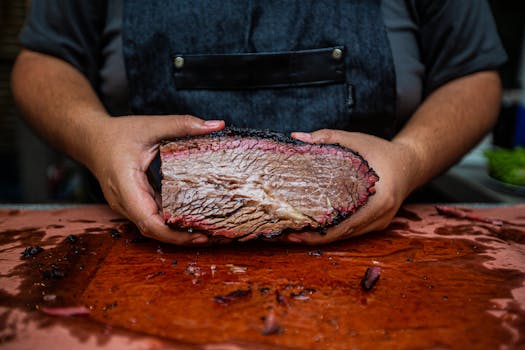
Rib Nirvana: A Pitmaster's Scientific Pursuit of Perfection
Forget old wives' tales; let's delve into the mesmerizing physics and chemistry of rib alchemy. Our aim transcends mere cooking; we seek a transfiguration—ribs so tender they practically disintegrate, yet boasting a seductively crisp bark. This sublime outcome hinges on a masterful orchestration of heat, chronometry, and hydration control.
The Maillard Marvel: A Flavor Fiesta: This isn't some kitchen cliché; it's the fundamental chemical ballet between amino acids and reducing sugars, birthing a symphony of hundreds of flavor compounds—the very essence of that irresistible mahogany crust. Picture it: a molecular pyrotechnic display on your ribs' surface. Temperatures must be precisely regulated; too intense, and you incinerate sugars prematurely. Too tepid, and your exterior remains pallid and insipid. Analogously, you wouldn't bake a souffle at a scorching heat, would you? [See the Wikipedia article on the Maillard reaction for more details.](https://en.wikipedia.org/wiki/Maillard_reaction)
Collagen's Capitulation: The Tenderness Tango: Achieving melt-in-your-mouth tenderness? It's all about collagen's surrender. This resilient protein, the connective tissue's stalwart framework, binds the meat like a tightly woven fishing net. Low and slow cooking is paramount. Only then does collagen gradually morph into gelatin, a luxurious, succulent substance. Imagine a stubborn fishing net slowly yielding to a warm bath—its fibers unravelling, parting gracefully. High heat, conversely, merely constricts this net, rendering your ribs tough as old boots. [This article from Serious Eats explains the science of collagen breakdown in cooking.](https://www.seriouseats.com/the-science-of-tender-meat)
Hydration Harmony: A Delicate Equilibrium: Moisture: your ultimate ally and, ironically, your greatest nemesis. Excessive moisture stews your ribs into a sodden, unappetizing mess. Conversely, insufficient hydration leads to dry, desiccated meat, a culinary catastrophe. The popular "3-2-1 method," rather than a magical spell, offers a practical strategy for moisture regulation, strategically employing wrapping to safeguard moisture during a pivotal cooking stage. This ensures a steady internal temperature increase without charring the exterior.
Smoke's Subtlety: Beyond Mere Aroma: Smoke's role far surpasses mere flavor enhancement. It forms a protective barrier, a thin film of smoke condensate acting as a natural insulator. This slows the cooking process, simultaneously promoting the Maillard reaction. Think of it as a vigilant shield against moisture evaporation. Furthermore, wood selection profoundly influences flavor profiles, a topic worthy of its own epic dissertation!
Internal Temperature: The Unerring Guidepost: Discard visual assessments—they are unreliable. An instant-read thermometer is your most indispensable instrument. A consistent internal temperature of 190-200°F (90-95°C) ensures complete collagen degradation, guaranteeing supreme tenderness. This scientifically precise approach replaces guesswork with unwavering certainty. [This article from the USDA provides guidance on safe meat cooking temperatures.](https://www.fsis.usda.gov/food-safety/safe-food-handling-and-preparation/safe-meat-cooking-temperatures)
Forget haphazard guesswork, folks! Scientific BBQ isn't about rigid dogma; it's about wielding the primal forces of heat and smoke with the precision of a surgeon. This isn't your grandpappy's barbecue; it's a culinary symphony orchestrated by an understanding of fundamental principles, yielding results far beyond mere luck or inherited recipes.
Heat management, moisture retention, and collagen metamorphosis—these are the holy trinity of exceptional ribs, not some arcane wood selection or a magical spice blend. Many time-honored BBQ traditions rely on unsubstantiated claims; the notion that a specific lumber type or a secret "rub" is the key to succulent ribs is, frankly, hogwash. While flavor components like rubs and woods undoubtedly contribute, they're mere embellishments to the core principles. Master those, and the rest follows like obedient piglets.
Predictability? Consistency? Consider them guaranteed. With a scientific framework, you become the maestro of your smoker, adapting your methods seamlessly to the specific cut of meat, the quirks of your cooker, and your desired level of smoky deliciousness. No longer a slave to rigid recipes, you command the entire process.
The Maillard reaction—that beautiful browning magic—becomes your canvas for creative exploration. Understanding it unleashes a world of possibilities with marinades and spice blends, producing flavor profiles as unique as your fingerprints. Similarly, manipulating the interplay of temperature and time on collagen breakdown allows you to sculpt the texture of your ribs, achieving that melt-in-your-mouth perfection.
Precision is paramount. This isn't about throwing meat on a fire and hoping for the best; it's about laser-focused control over temperature zones, cooking durations tweaked to the meat's thickness, and a meticulous approach to moisture regulation. Think of it as a complex equation—understanding each variable's impact grants you absolute mastery over the final product, yielding flawless results every single time.
And when the inevitable hiccups occur—because even pitmasters face challenges—a scientific understanding becomes your troubleshooting compass. Instead of aimless adjustments, you systematically pinpoint the culprit and implement targeted solutions. This iterative approach continually hones your skills, transforming each minor setback into a valuable lesson, driving constant refinement and improvement.
In short, scientific principles don't just improve your BBQ game; they revolutionize it. This isn't just about cooking ribs; it's about mastering the art and science of transforming humble pork into a culinary masterpiece that transcends mere sustenance, becoming an experience both sublime and repeatable. You'll not only craft ribs that redefine your personal BBQ standards, but elevate your entire culinary perspective. Unlocking the secrets of [Unlocking the Secret to Restaurant-Quality Brown Gravy: Mastering the Maillard Reaction,](/how-to-make-brown-gravy) for example, can significantly enhance your overall cooking skills and create a [Beef Stew Alchemy: Mastering the Art of Flavor Depth (Beyond the Recipe),](/how-to-make-beef-stew) that is truly unforgettable. Similarly, learning [Roux Revelations: Mastering the Art of the Perfect Béchamel, From Science to Soul,](/how-to-make-a-roux) can help you create incredibly rich and flavorful sauces. For those interested in expanding their culinary horizons beyond ribs, consider exploring the art of [Lobster 101: From Claw to Crack, Mastering the Art of the Perfect Boil (and Beyond),](/how-to-cook-lobster) or perhaps [Baked Potato Alchemy: Transforming a Humble Spud into a Gourmet Masterpiece](/how-to-cook-baked-potatoes).